
In Australia blowtorches were commonly known as blowlamps.
We are excited to be adding blowlamps (blowtorches) to the website! We’re sure that some of you have been collecting these appliances and would like to share them with others on this website. In an attempt for us to keep this manageable, we’re asking you to fill out the form on the About US page and send images. If you have any literature about the model and its manufacturer that you can share, please attach it.
Since we’re not sure what submissions you may want to make and there are a host of makers around the world, please tell us as much as you can about your blowlamp (blowtorch), using the form for just one appliance for each submission.
You may send more than one but please do each one separately. We want to spread this out among all the collectors so don’t send more than three for the time being. Email your submissions to us at:
terrymarshgallery@gmail.com
We will reply as time permits.
COMPANION BRAND
The company was registered as Companion Heaters Ltd on 21 May 1941 and later changed its structure to a public proprietary limited company; Companion Heaters Pty Ltd. The company manufactured a variety of blowlamps and stoves mostly under licence from Max Sievert, Sweden.
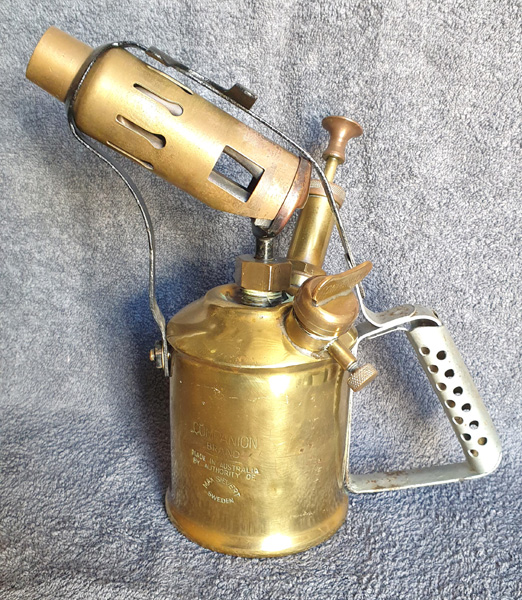
Companion 42 (Kerosene 1pt – 1950s to 60s)
Notes: This blowlamp was the most common blowlamp found in Australia and was commonly used by plumbers and painters. The build quality was very high. The round knob on the air screw differs from earlier models with a flat fitting.
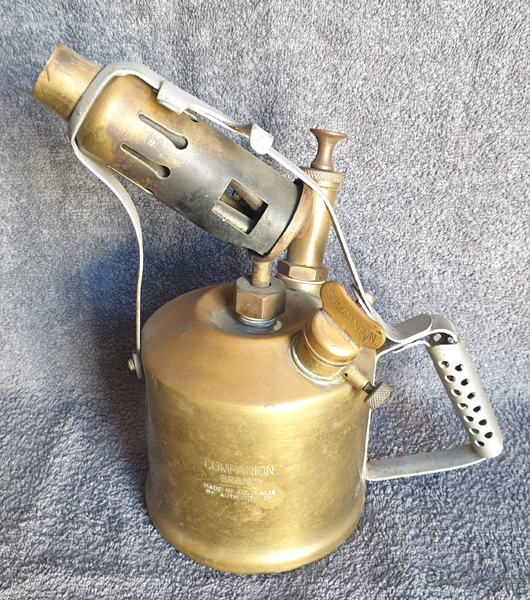
Companion 43 (Kerosene 2pt – 1950s to 60s)
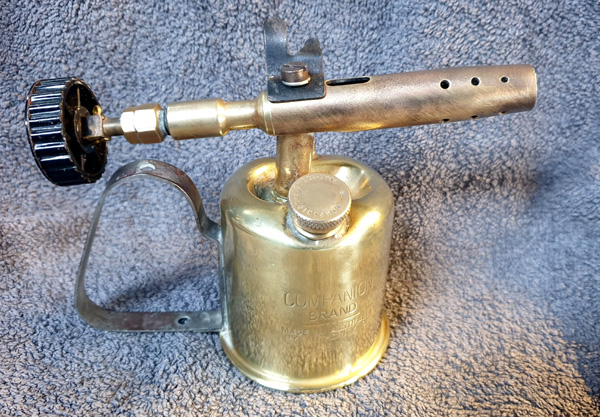
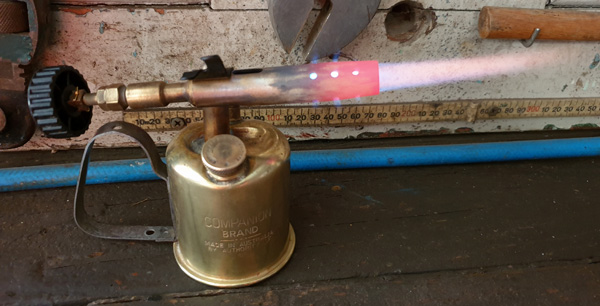
Companion 207 (Petrol (Gasoline) 1/4pt – About late 1950s)
Notes: Very few were made and the similarities with the Sievert 207 are based on licensing. The unit is primed with alcohol (known as Metho in Australia). Darlton had an uncanny similar unit.
DARLTON
Darlton Products Pty. Ltd. was actually a distributor and its blowlamps and stoves were manufactured by others. Commencing in 1944 Darlton products were made by Prymace Engineering Company Pty Ltd. Later, from 1947 to 1963, they were made by Commonwealth Metallic Pty. Ltd.
The latter company also from 1947 started the production of the Self-Heating Soldering Iron (SHSI) model. The Darlton product range was expanded around 1954 to include a blowlamp based paint stripper and some related combination fittings. Interestingly advertisements for Darlton appear to be concentrated between 1946 and 1953 which is odd considering the product range expansion in 1954.
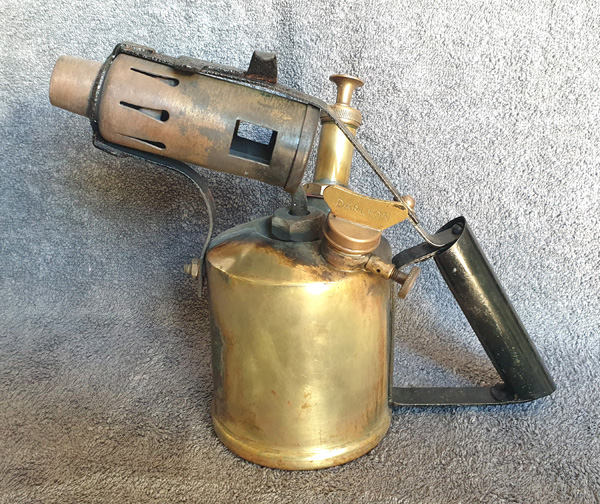
Darlton 1pt (Kerosene – 1946 to 1954)
Notes: Darlton manufactured a large range of blowlamps and brazing lamps. This was their standard model. The handle generally was tubular like.
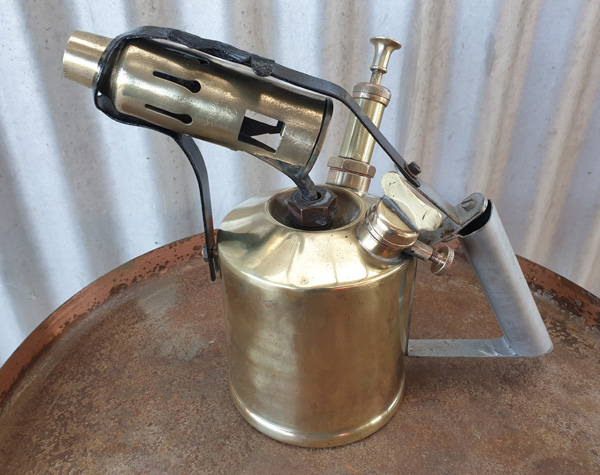
Darlton 2pt (Kerosene – 1947 to 1963)

Darlton Continuous Soldering Iron
Petrol (Gasoline) 1/4 pt – 1940s
Notes: This model is identified by the black valve knob indicating earlier production.
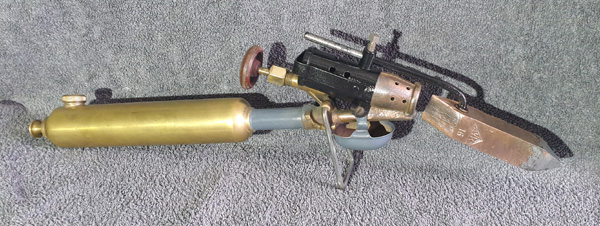
Darlton Continuous Soldering Iron
Petrol (Gasoline) 1/4 pt – 1947 to 1963
Notes: This model has the red valve wheel. The soldering iron could be removed for more general use as a blowtorch. A similar model exists with a stamped badge soldered onto the handle reading ‘Darlton – Australia’.
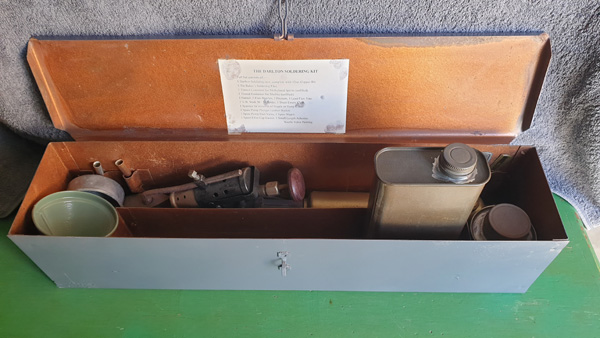
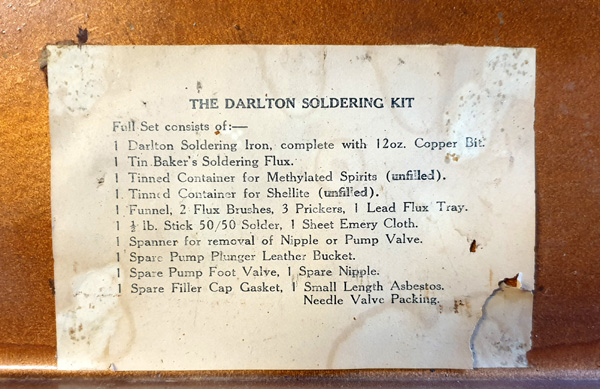
Darlton Soldering Kit
Petrol (Gasoline) 1/4 pt – abt 1947 to mid-50s
Notes: This kit contained a continuous soldering iron and many soldering accessories. The case has been repainted on the outside but the original colour was the bronze colour shown inside.
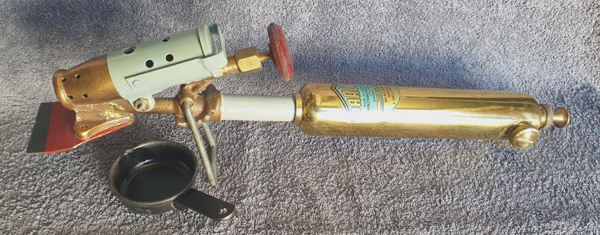
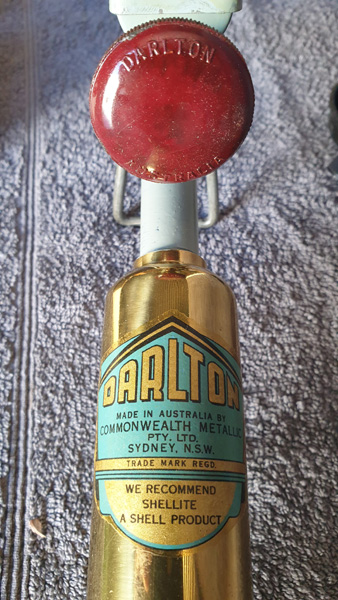
Darlton ‘Speedy Paint Stripper’
Petrol (Gasoline) 1/4 pt – 1954/55
Notes: This unit, from the Sedgman collection is unfired. Blowlamps were commonly used to heat old paint, especially on house weatherboards, prior to scraping the blistered paint off. This unit combined the scraper with the blowlamp.
LANRAY
In July 1940 Lanray Metal Products Pty Ltd was formed, though related companies were already operating. They produced blowlamps and stoves and had access to a metal coating process as some products were made of steel during the WWII years.
So by late 1940 Lanray Metal Products Pty Ltd was manufacturing Australian made blowlamps, probably mainly for the Australian Army. Notably, it was Eric Vidor who is stated to have had the idea of manufacturing the blowlamps.
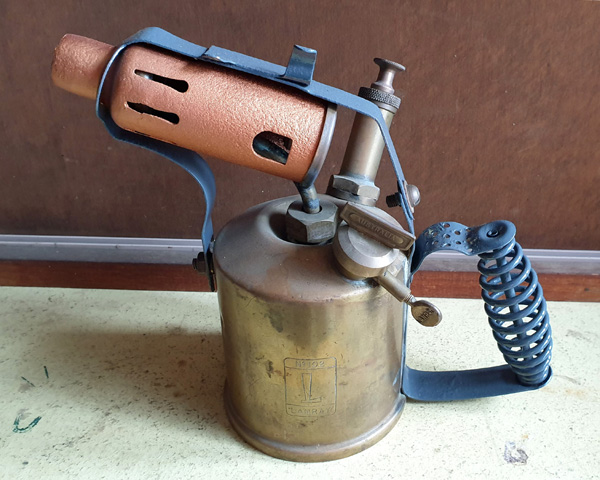
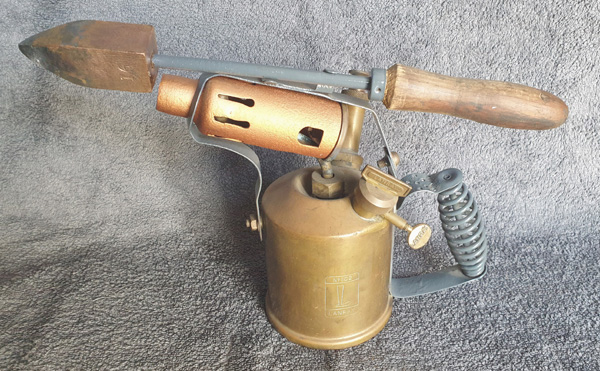
Lanray 102 (Kerosene 1 pt – 1947-1949)
Notes: A branded stamped tank and a distinctive spring handle help identify this blowlamp (top). Often a soldering iron was rested for heating (bottom). The soldering iron copper head is heavy which balances the iron on a small tab and the handle end is then pushed upwards against a ‘hook’ to keep the iron in position.
© 2000-2025 Terry Marsh
 The Terrence Marsh Lantern Gallery