
This page displays blowlamps from a variety of British manufacturers. Some brands may have their own page as the numbers displayed increase. The British term blowlamps (aka blowtorches) is used solely on this page.
BLAYDON
T. E. Blaydon & Son Ltd. of Birmingham made a large variety of blowlamps and plumber’s furnaces.
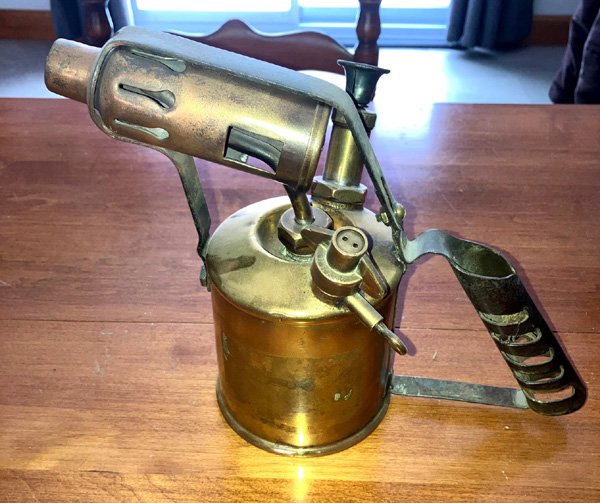
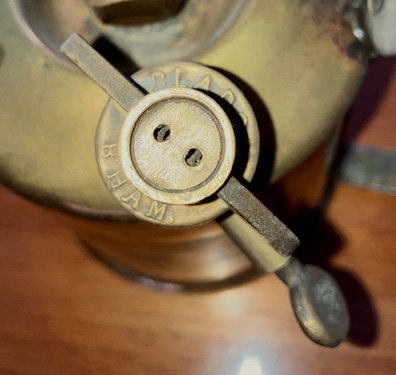
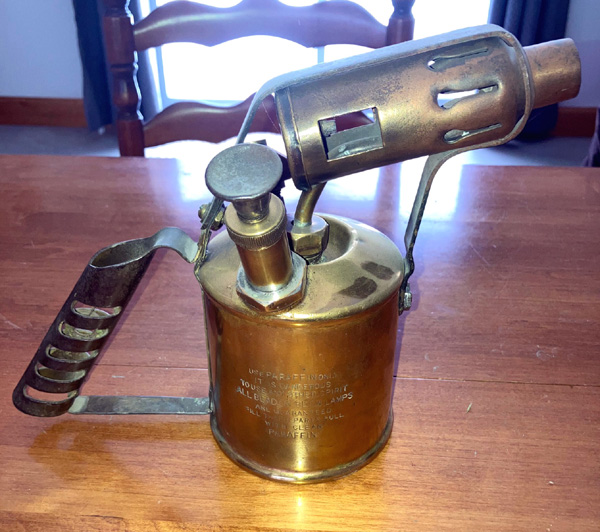
Bladon (Kerosene 1 pt ) about 1950s
Notes: This brass blowtorch, with an inclined burner, was made by T. E. Bladon & Son Ltd from Birmingham, England. The vapouriser is tubular in design and the pump knob is made of Bakelite (lower image). This model, from the collection of Marc Hebert, has an automatic safety device (middle image) built into the filler cap. The handle is a slotted metal tubular design. The Bladon model B50 is the same but without the automatic safety device.
BURMOS
Burmos blowlamps were manufactured by Townson & Coxson & Co. Ltd. in England.
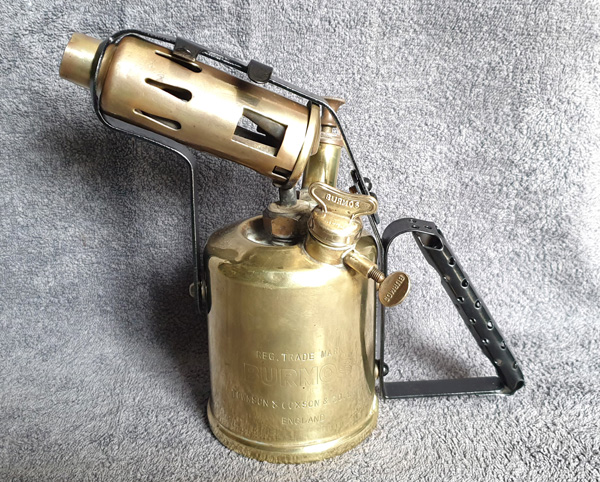
Burmos Regency No. 2 (Kerosene 1 pt – abt 1950s)
Notes: A very solid and sturdily made blowlamp. The weight of 1247g empty is noticeably heavier than many other 1 pt blowlamps. The design incorporates a twin coil to reduce carbon build up. All the seams are brazed, not soldered. Model 2A had a vertical burner.
KINGS NORTON
A less well-known brand of blowlamp with a history not fully determined. The Kings Norton Metal Company Ltd of Birmingham, England made several blowlamps which have a strong similarity with some British made Optimus blowlamps.

Kings Norton Oriflamme (Kerosene 1 pt – abt 1920s)
Notes: A standard sized blowlamp with the Oriflamme designation. Unusual and probably later than some of the other KN 1 pt models since the other models usually had a stamped badge attached.
MONITOR
A well known brand built on a good reputation and a variety of pressure products.
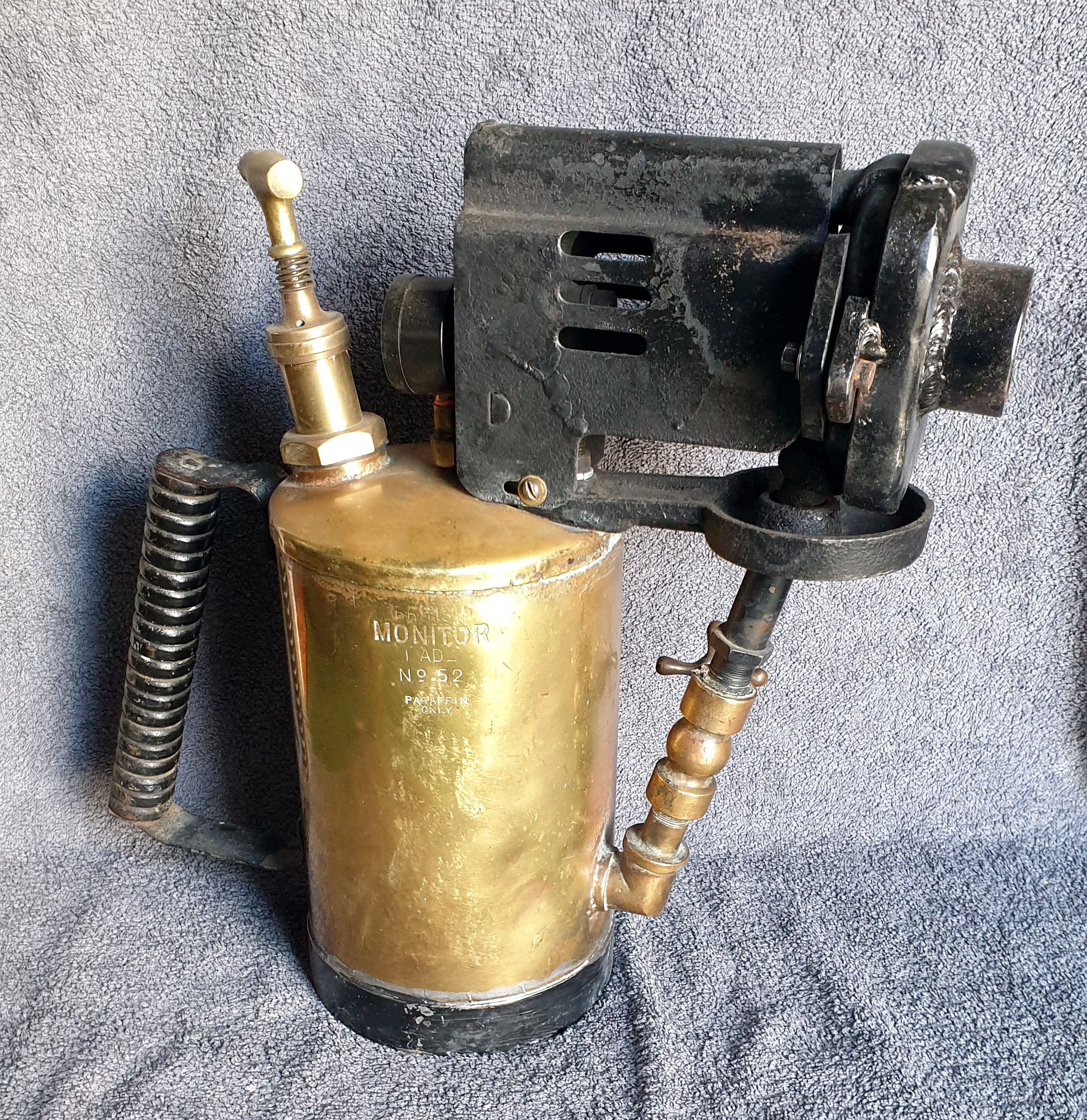


Monitor 52 (Kerosene 5 pt – 1936 abt)
Notes: Monitor made several Super-Brazer models and this fundamentally top-heavy brazing lamp was made for many years. The unit is based on the Barthel patent. In 1934 an improved baffle plate was added. The coil was made from nickel chrome tube to resist wear. The control tap allows the unit to be turned off and the pressure retained. This unit from the Sedgman collection has a new pressure gauge and a refabricated front nozzle.
SAMUEL HEATH & SONS LTD
An old English firm that made many products in brass. In 1981 they became a Public Limited company. They made many products under their own name but also many under the brand name of ‘Thermidor’.
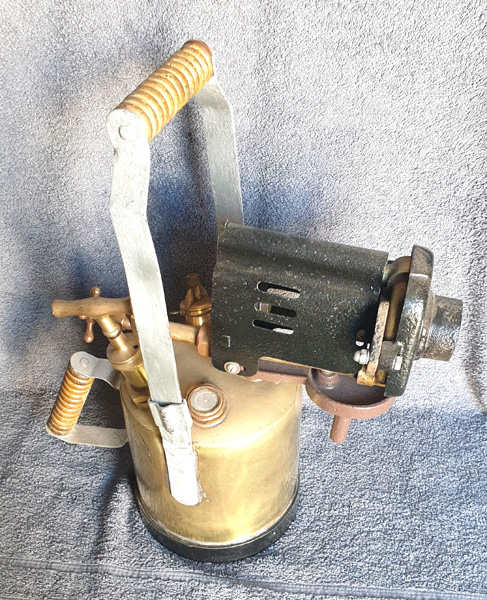
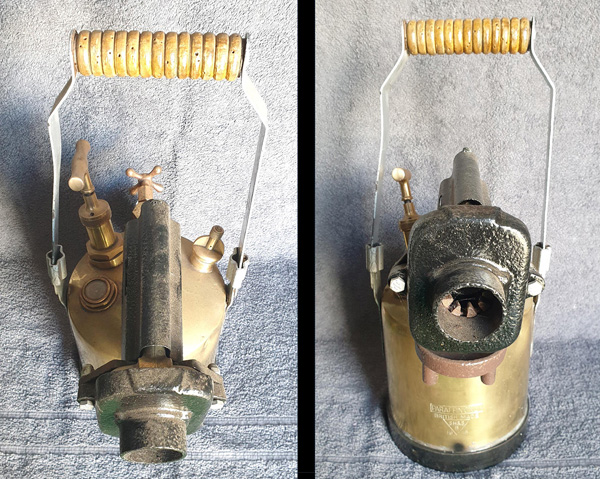
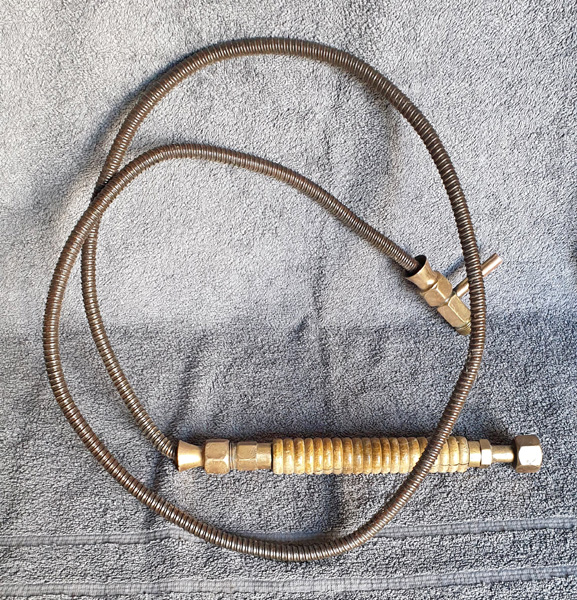
SH&S T206 (Kerosene 6 pt – 1948)
Notes: Samuel Heath & Sons made this 6 pint squat Super-Brazer to the German Barthel patent. Many companies made identical brazing lamps from the 1930s through to and after WWII. The unit has a recessed pressure gauge, a safety release filler cap and a coil made out of nickel chrome tube. The bail handle can be moved to a more horizontal position by the release of two catches. This model came with an optional metal flexible extension tube which allowed the burner head to be extended out to 7 feet six inches from the tank to reach into awkward spaces. The unit was ideal for motor and cycle work as well as being suited for railway and shipping sites.
THE TILLEY LAMP COMPANY
Tilley kerosene lamps and lanterns are very well known and most models are eagerly collected by enthusiasts. Their quality over many decades was of renown. Blowlamps were not part of the Tilley stable, though the LD2 is the exception.
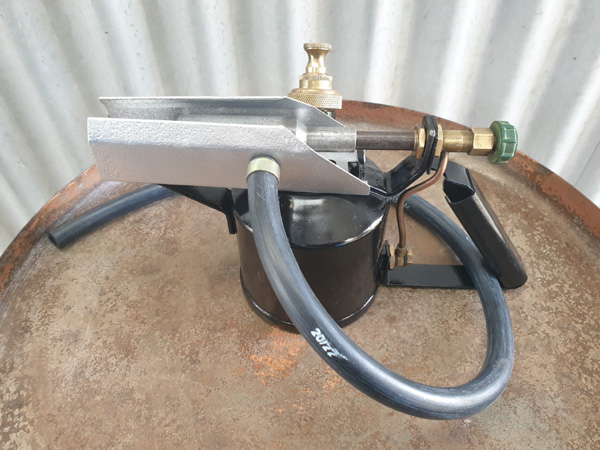
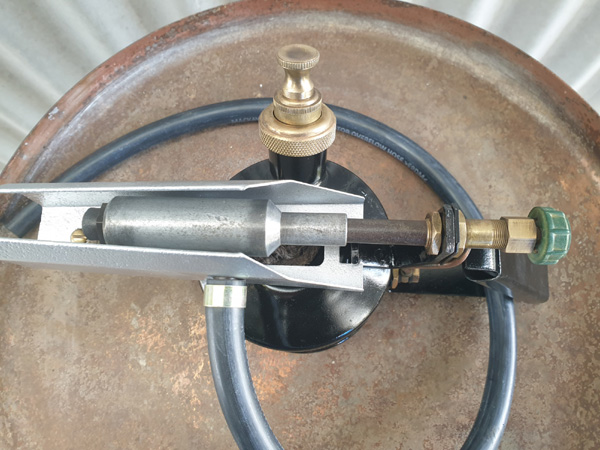

Tilley LD2 (Methylated Spirit 3/4 pt – abt 1958 – 1963)
Notes: This blowlamp was first and foremost a leak detector for use in the refrigeration industry. Once burning on Methylated Spirit a suction is created on the attached air tube and if a leaking refrigerant gas was detected the color of the flame would change. Methyl Chloride and Freon were the common refrigerants detected. The unit could also be used as a blowlamp for light work. A later model, the LD2 MkII, came out with a slightly different tank.
VERITAS
Veritas is a trade name of Falk, Stadelmann & Co Ltd who made blowlamps as well as their lamps, lanterns and probably stoves.

Veritas P9884 (Kerosene 1 pt – abt 1950s)
Notes: This inclined model, is made from heavy gauge brass and has a perforated steel handle that stays cool. The filler cap is not the original stamped ‘VERITAS’, though the air screw being separate is correct. Some Veritas 1 pt models had filler caps with built in air screws.
© 2000-2026 Terry Marsh
 The Terrence Marsh Lantern Gallery